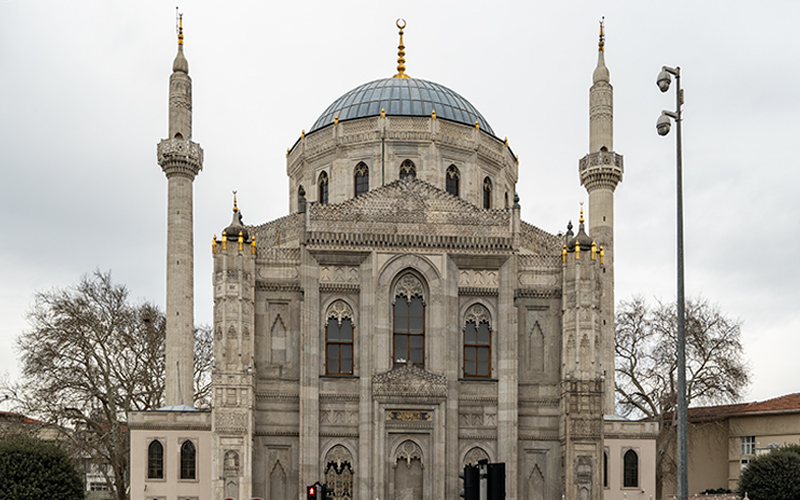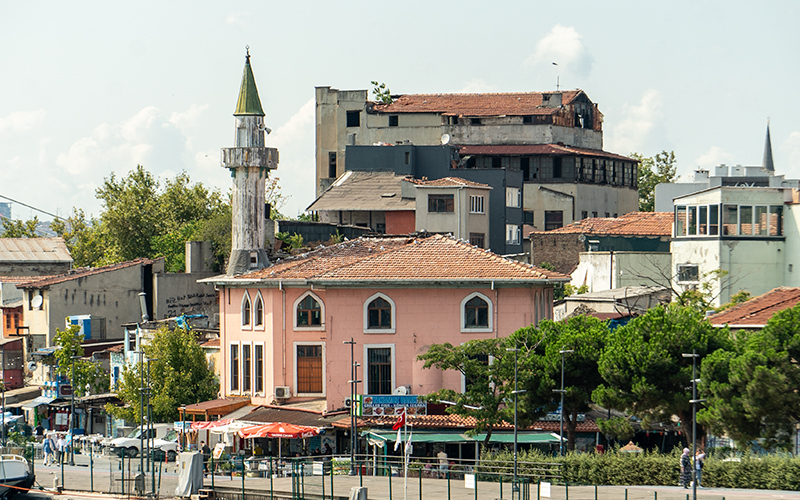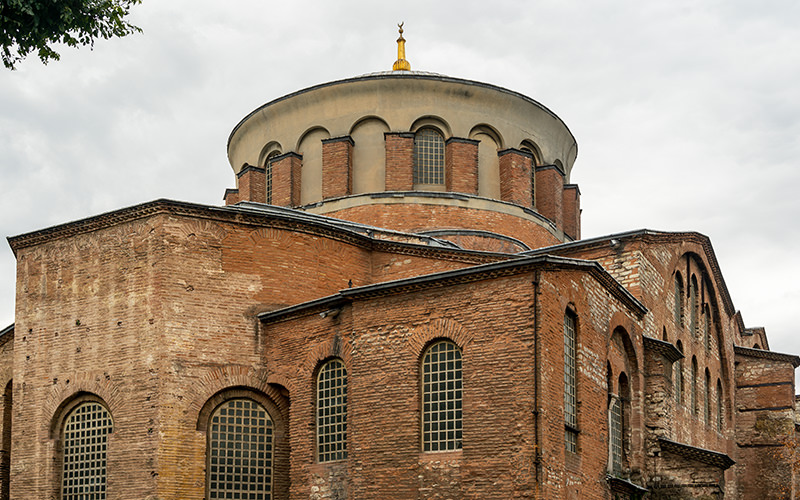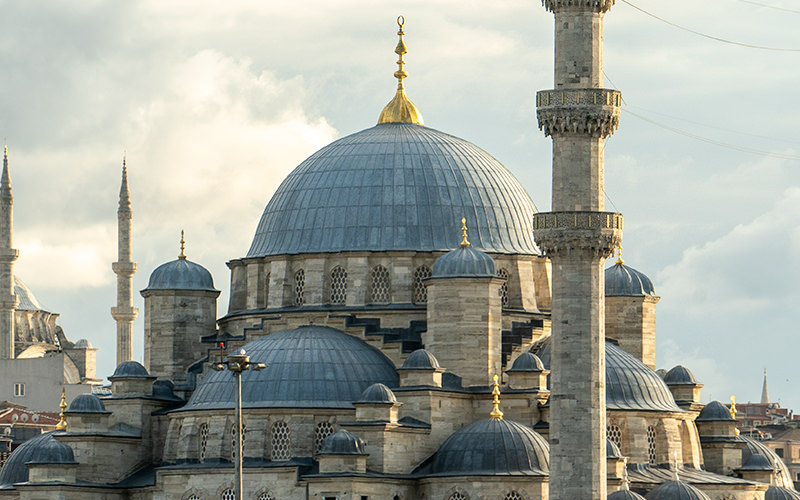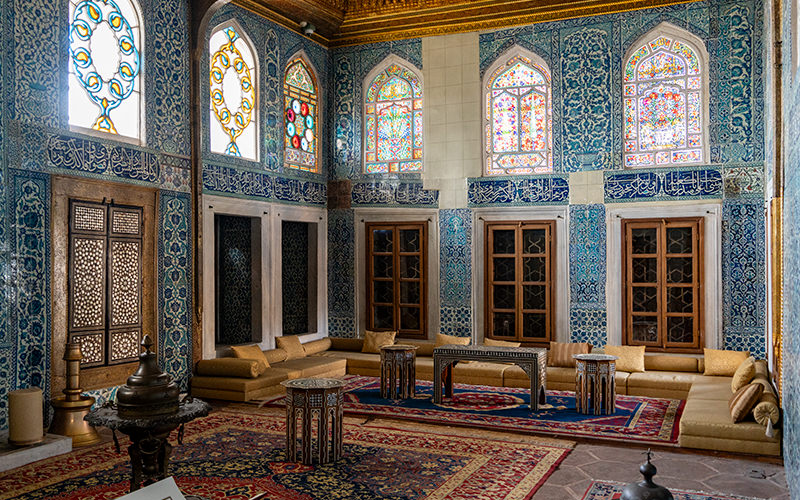
Even though the Rüstem Pasha Mosque is located in a bustling tourist area of the city, noticing it while passing by is not always easy — the complex is surrounded by small shopping streets, and from them, the building looks like an inconspicuous structure with stone walls. The best view of the mosque opens up from the Golden Horn. But you should not limit yourself to merely observing the landmark from the outside. Step inside — and you will be amazed by the design of the building's interiors. It is considered to be one of the most richly decorated mosques of the Ottoman Empire era.


History of the mosque
The construction of the Rüstem Pasha Mosque complex began in 1561 on the site of the already existing Haji Halil Mosque. The building was erected for Rüstem Pasha, the Grand Vizier and son-in-law of Sultan Suleiman the Magnificent. He was once considered the wealthiest inhabitant of the empire after the ruler. Sometimes the word damat (son-in-law) is added to the vizier's name, but he was also known by the less pleasant nickname "louse of fortune." This is due to the fact that Rüstem Pasha received permission to marry the sultan's favorite daughter despite being infested with lice.


The architect of the mosque complex was Mimar Sinan — the famous architect who built the Sokollu Mehmed Pasha, Mihrimah Sultan, Şehzade, and Süleymaniye mosques. By the way, the tomb of the architect himself is located near the last of these. You can walk there from the Rüstem Pasha Mosque in about 10–15 minutes.
The mosque looks quite small, but, as I wrote above, its main feature is its richly decorated interiors. It has been established that the mosque features 7,227 tiles with 36 known tulip motifs, 16,043 tiles decorated with 56 different motifs in five colors, 6,218 borders of 747 types, 850 tiles with calligraphic inscriptions, and 1 tile depicting the Kaaba.


I call the mosque a complex because this ensemble, in addition to the mosque building itself, included two hans (inns). Today they are used for storing spices.
How to get there
It is convenient to walk to the mosque from the "Eminönü" tram stop. This is the T1 line, and its route passes by many of Istanbul's famous spots. You can plan your route using Google Maps.


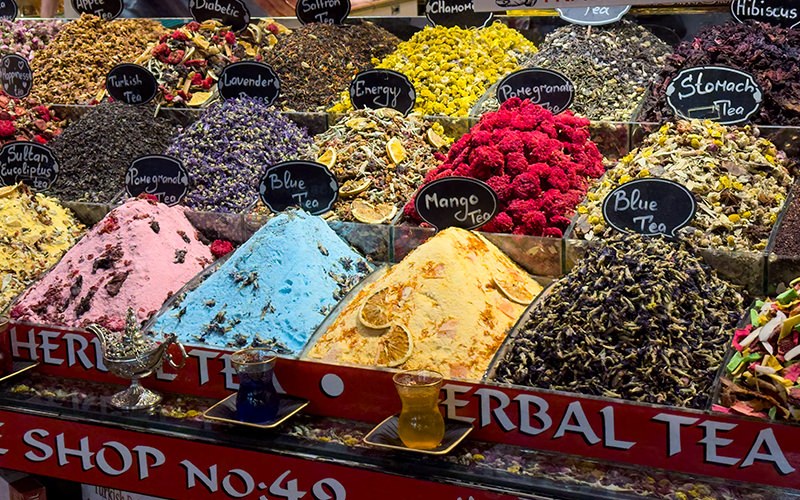
A visit to the mosque is best combined with a walk through the Egyptian Bazaar: the ancient shopping complex is located literally a few minutes from here. Along the way, you can buy souvenirs, spices, or the locally popular Mehmet Efendi coffee.
Other popular tourist spots in the city are located nearby: the New Mosque, the Sultan's Pavilion, and the Sirkeci station.
Have a great walk!