The Egyptian Bazaar is one of those places that almost every tourist visiting Istanbul ends up seeing. This market complex is located in the very heart of the city, within walking distance of many of the metropolis’s main attractions. I’ve been to the bazaar dozens of times, but I only took photos for an article during my most recent trip. Here, I’ll tell you about the history of this place.


A walk through the Egyptian Bazaar
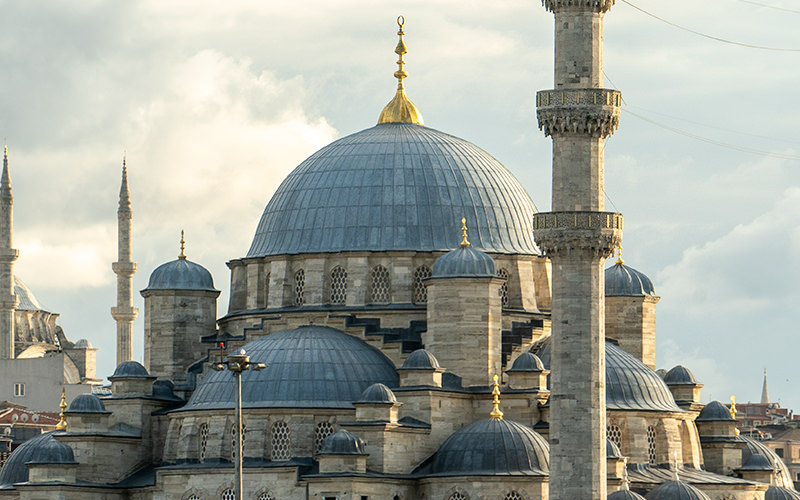
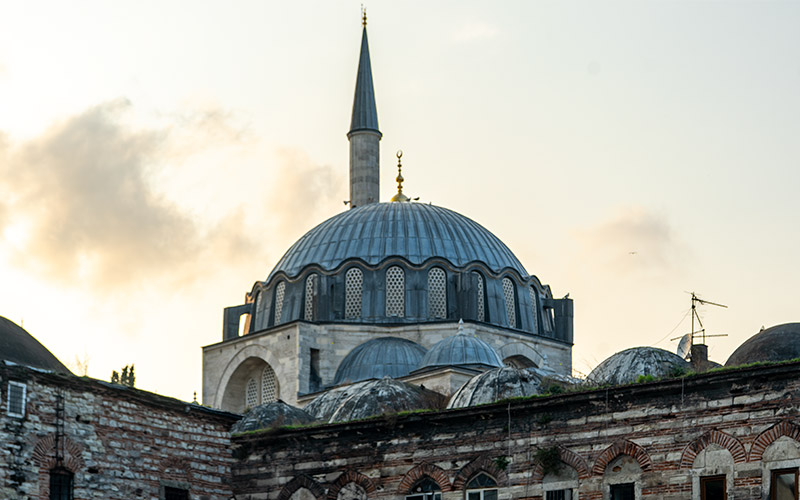
The complex is known as the Egyptian Bazaar or the Spice Bazaar. Both names are quite clear: the first is linked to the fact that goods were once delivered here via Egypt, while the second recalls the period when spices and herbs were the main products sold in the market’s shops. At one time, the Egyptian Bazaar was part of the New Mosque complex, which it adjoined. One of the market’s functions was to generate income for this religious building.


The Egyptian Bazaar was built in 1660. The patron of its construction was Turhan Hatice Sultan, the mother of Sultan Mehmed IV. In its early years, the bazaar was dominated by merchants selling herbs and cotton.
Over its long history, the complex has suffered several major fires. The building has also undergone a number of reconstructions. In 1941, the bazaar and the mosque were separated by a pedestrian zone.


The building of the Egyptian Bazaar has an L-shaped layout. It has six gates and around 100 shops. The trading area extends far beyond the bazaar’s walls. Near the exit facing the New Mosque, you can see vendors selling seeds and pet supplies. The western gate of the market opens onto a long shopping street with a wide variety of goods: here you can buy kitchenware, coffee, and even Christmas decorations.


Inside the bazaar itself, most of the goods are aimed at tourists: tea, spices, sweets, and souvenirs are the main items sold here. Visitors are often invited to try products for free before making a purchase. Guidebooks mention that many shops have pictograms indicating what is sold inside. To be honest, I’ve never really paid attention to those details.


How to get there
The Egyptian Bazaar is very conveniently located. You can reach it by tram (Eminönü stop), metro (Sirkeci station), or ferry (Eminönü pier). It’s easy to plan a walking route using Google Maps, and public transport routes can be planned with the Moovit app.
Entry to the bazaar is free. In many shops, you can pay with both cash and bank cards.


After visiting the market, you can step into the New Mosque, take a look at the Sultan’s Pavilion, or walk to Sirkeci Station. All of these places are just a few minutes away from the Egyptian Bazaar.
Enjoy your walks!