One day during my trip to Istanbul, I decided to find a non-touristy attraction outside the city so I could take a break from the crowds in the central part of the metropolis, at least for a while. Out of several options, I chose a place called Rumelifeneri. It’s a small settlement on the Black Sea coast with a lighthouse and an abandoned fortress.


Walk to the fortress and the lighthouse
The names of both the area and the fortress come from the lighthouse located here — Rumelifeneri. “Rumelia” was the name for the Ottoman Empire’s territories on the Balkan Peninsula, and “Feneri” translates as “lighthouse” (or literally, “lantern”).


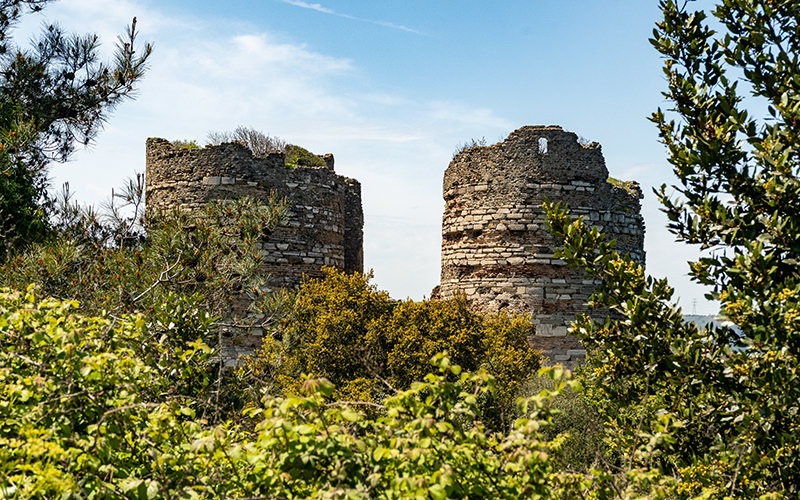
Of the two landmarks — the lighthouse and the fortress — the second one interested me the most. The fortress, also known as the Artillery Fortress, stands on the shore of a small bay facing the Black Sea. This fortification was built in the 17th century. Even before coming here, I found out that I wouldn’t be able to get close: the way is blocked by a fence. Online sources say that the semi-ruined structure is currently under reconstruction.
Even though I couldn’t enter the fortress area, I still managed to take a few photos from afar — from the bay and from the part of the territory where the lighthouse is located. My route started at the bus stop near a ŞOK store. From there I went down to the bay, then climbed up to its southern shore, walked to the port, and returned to the stop. There were very few people here, and life in the settlement felt calm and quiet.


.webp)
The Rumelifeneri Lighthouse traces its history back to the 17th century, although signal lights at the entrance to the Bosphorus existed as far back as antiquity. The lighthouse we see today was built in 1769, and it was modernized in the middle of the next century. The structure is 30 meters tall. Rumelifeneri forms a pair with the Anadolu Feneri Lighthouse, which stands on the opposite side of the Bosphorus.
A leisurely walk around Rumelifeneri took me about an hour. I visited in October, and the weather didn’t allow for spending much time outdoors comfortably — but if you come here in summer on a sunny day, you could easily have a picnic by the shore.
.webp)

.webp)
How to get there
Getting to Rumelifeneri by public transport is quite convenient. I took bus No. 150, which departs from Hacıosman metro station — the terminal stop of the green line. The bus arrived two minutes after I exited the metro. The ride took 41 minutes one way. Planning the route is easy with the Moovit app.
.webp)


The weather deserves a special mention. The forecast said Rumelifeneri would be sunny and calm, but while I was on the way everything changed dramatically: it started raining, and a strong wind picked up. Most likely, this kind of sudden shift is influenced by how close the settlement is to the Black Sea. So when planning a trip, I think you can ignore the forecast and just go on a whim.


Other interesting places far from the center include, for example, Yoros Castle or Aydos Fortress — both are on the Asian side of Istanbul.
Enjoy your travels!